
UX and UI designers
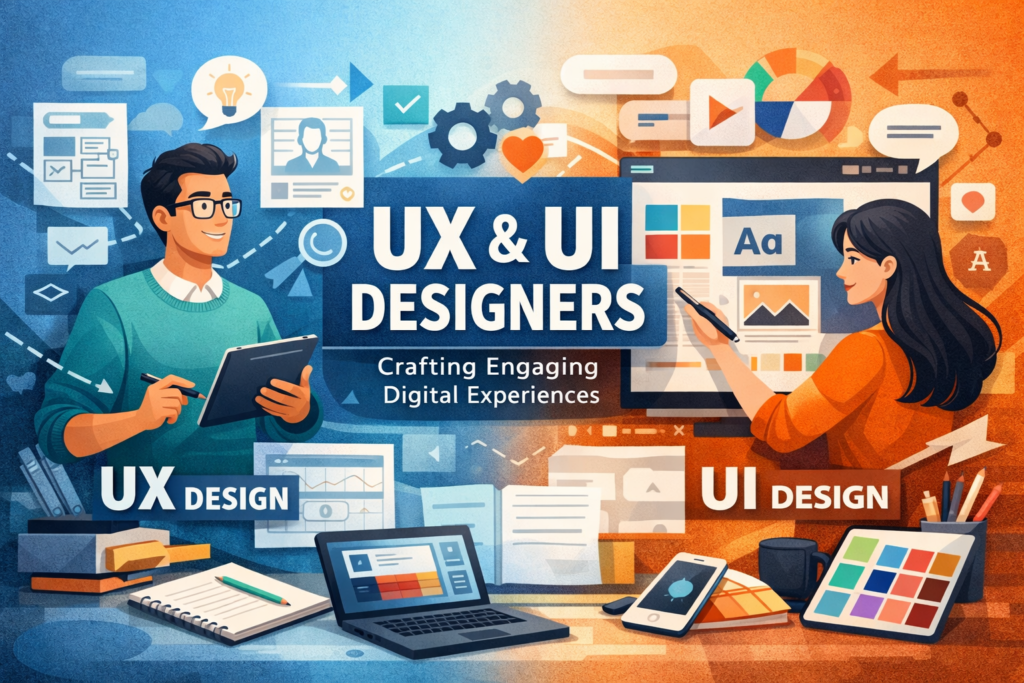
In today’s digital world, design is not just about looks — it’s about experience. Every time someone visits a website, uses an app, or shops online, their decision to stay or leave depends on how smooth and enjoyable the experience feels. This is where UX and UI designers play a critical role.
Businesses that invest in professional UX and UI designers create digital platforms that are not only attractive but also easy to use. These platforms increase engagement, boost conversions, and build trust with customers. On the other hand, poor design can drive users away within seconds.
This guide explains everything you need to know about UX and UI designers, their importance, their process, and how they help businesses succeed online.
What Are UX and UI Designers?
Many people confuse UX and UI, but they serve different purposes while working together.
UX (User Experience) designers focus on how a product feels. Their goal is to create a smooth, logical, and satisfying user journey.
UI (User Interface) designers focus on how a product looks. They design visual elements like buttons, layouts, colors, and typography.
Together, UX and UI designers create digital experiences that are both functional and visually appealing.
UX designers focus on:
-
User research
-
Navigation structure
-
Wireframes and prototypes
-
Usability testing
-
User flows
UI designers focus on:
-
Visual design
-
Branding elements
-
Color systems
-
Typography
-
Interactive design
Without UX, a design may look pretty but feel confusing. Without UI, a platform may work well but appear outdated or unattractive. Successful products need both.
Why UX and UI Designers Are Essential for Modern Businesses
Digital competition is stronger than ever. Users expect fast, simple, and beautiful experiences. Businesses that ignore design lose customers to competitors who prioritize usability.
Professional UX and UI designers help businesses:
Improve user satisfaction
When users enjoy using a platform, they stay longer and return more often.
Increase conversion rates
A smooth checkout process or clear call-to-action can dramatically improve sales.
Reduce bounce rates
Good design keeps users engaged instead of leaving immediately.
Strengthen brand credibility
Modern, polished design builds trust and professionalism.
Save development costs
Early UX planning prevents expensive redesigns later.
Investing in UX and UI designers is not an expense — it’s a growth strategy.
The Process UX and UI Designers Follow
Professional UX and UI designers use a structured process to ensure success.
1. Research and discovery
Everything starts with understanding the audience. Designers study user behavior, pain points, and expectations. This stage includes:
-
User interviews
-
Competitor analysis
-
Market research
-
Persona creation
Good research prevents guesswork.
2. Wireframing and structure
UX designers create wireframes to plan layout and navigation. These are basic blueprints that focus on function, not visuals.
Wireframes help teams visualize how users will move through a product.
3. Prototyping
Interactive prototypes simulate real experiences. Teams can test flows before development begins.
This stage reduces risk and catches usability issues early.
4. Visual design
UI designers apply branding, color systems, and typography. They transform wireframes into polished interfaces.
Consistency is key here.
5. Testing and refinement
Usability testing reveals real user reactions. Designers refine the product based on feedback.
Great design evolves continuously.
Key Skills Every UX and UI Designer Needs
Top UX and UI designers combine creativity with logic. Their skill set includes both artistic and technical abilities.
Research skills
Understanding user behavior is the foundation of UX.
Problem-solving
Designers must solve real-world usability challenges.
Visual communication
UI design requires strong aesthetic judgment.
Collaboration
Designers work closely with developers and marketers.
Attention to detail
Small design choices impact user experience.
Adaptability
Digital trends evolve constantly.
A great designer never stops learning.
UX vs UI: Understanding the Difference
Although UX and UI designers work together, their responsibilities differ.
| UX Designers | UI Designers |
|---|---|
| Focus on usability | Focus on appearance |
| Research-driven | Visual-driven |
| Structure and flow | Layout and styling |
| User journey | Interface beauty |
| Functionality | Aesthetic experience |
Think of UX as the blueprint and UI as the decoration. Both are essential.
How UX and UI Designers Impact Business Growth
Design is directly connected to revenue. Businesses that prioritize user experience often outperform competitors.
Better customer retention
Users return to platforms that are easy to use.
Stronger brand perception
Professional design builds credibility.
Higher engagement
Good interfaces encourage interaction.
Increased sales
Optimized user journeys reduce friction in buying processes.
Competitive advantage
Superior design sets brands apart.
UX and UI designers help companies turn visitors into loyal customers.
Common Mistakes Businesses Make Without UX and UI Designers
Many businesses underestimate the importance of design. This leads to avoidable problems.
Overcrowded interfaces
Too much information overwhelms users.
Poor navigation
Users cannot find what they need quickly.
Slow performance
Heavy design reduces loading speed.
Inconsistent branding
Mixed styles weaken brand identity.
Ignoring mobile users
Mobile-first design is essential today.
Professional UX and UI designers prevent these costly mistakes.
Trends Shaping the Future of UX and UI Design
The design industry evolves rapidly. Modern UX and UI designers adapt to new technologies and expectations.
Minimalist design
Clean layouts improve usability.
Dark mode interfaces
Users prefer customizable viewing options.
Micro-interactions
Small animations enhance engagement.
Accessibility design
Inclusive design reaches wider audiences.
AI-driven personalization
Smart interfaces adapt to users.
Businesses that follow design trends stay competitive.
How to Choose the Right UX and UI Designers
Hiring the right designers is crucial. Consider these factors:
Portfolio quality
Look for real projects and measurable results.
User-centered approach
Design should focus on solving problems.
Communication skills
Clear collaboration improves outcomes.
Technical understanding
Designers should understand development limits.
Industry experience
Relevant experience accelerates success.
Great UX and UI designers act as strategic partners, not just artists.
FAQs About UX and UI Designers
What is the difference between UX and UI designers?
UX designers focus on usability and user journey, while UI designers focus on visual design and interface appearance.
Do small businesses need UX and UI designers?
Yes. Even small businesses benefit from professional design because it improves credibility and conversions.
Can one person be both a UX and UI designer?
Yes. Many professionals are skilled in both areas, often called product designers.
How long does UX and UI design take?
It depends on project complexity, but proper research and testing always require time.
Is UX and UI design only for websites?
No. It applies to mobile apps, software, dashboards, and digital products.
Conclusion
In the modern digital landscape, design determines success. Businesses that invest in professional UX and UI designers create experiences that attract, engage, and convert users. These designers combine research, creativity, and strategy to build platforms that people enjoy using.
Ignoring UX and UI is no longer an option. Customers expect seamless experiences, and competitors are only one click away. Whether you run a startup or an established company, working with expert UX and UI designers is one of the smartest investments you can make.
Great design is not decoration — it is a business tool that drives growth.
Visit About Us page to contact or Through WhatsApp.
Your journey starts here — and we’re ready to help you every step of the way.
