
Ecommerce Platform
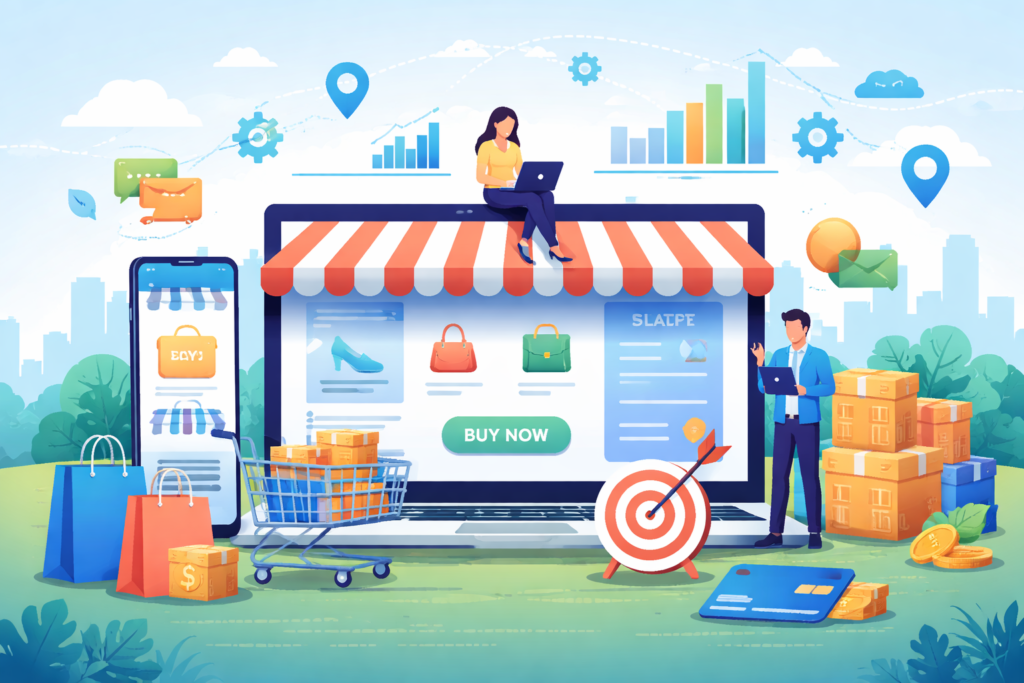
The Complete Guide to Building, Growing, and Scaling Your Online Business
An ecommerce platform is the foundation of every successful online store. In today’s digital economy, businesses no longer depend only on physical locations. Instead, they rely on powerful ecommerce to sell products, manage operations, reach global customers, and generate consistent revenue.
If you want to launch an online store, grow an existing business, or move from offline to online, choosing the right ecommerce is one of the most important decisions you will make. In this complete guide, you will learn what an ecommerce is, how it works, the types available, key features to look for, and how to select the best solution for your business.
This in-depth guide will help beginners, entrepreneurs, startups, and established brands understand everything they need to know before investing in an ecommerce.
What Is an Ecommerce Platform?
An ecommerce is a software solution that allows businesses to create, manage, and operate an online store. It provides tools to display products, process payments, track inventory, manage customers, and handle shipping.
In simple terms, an ecommerce is the digital infrastructure that powers your online store. Without it, selling products online would require building complex systems from scratch.
Modern ecommerce platforms offer:
-
Website building tools
-
Product management systems
-
Secure payment gateways
-
Order management
-
Customer account management
-
Marketing integrations
-
Analytics and reporting
Whether you sell physical products, digital downloads, subscriptions, or services, an ecommerce platform makes online selling structured and efficient.
Why an Ecommerce Platform Is Essential in 2026
The global ecommerce market continues to grow every year. Customers now expect:
-
Fast online checkout
-
Mobile-friendly shopping
-
Multiple payment options
-
Secure transactions
-
Personalized shopping experiences
A powerful ecommerce platform helps businesses meet these expectations.
Here are the key reasons why investing in the right ecommerce platform is critical:
1. Global Reach
An ecommerce platform removes geographical limitations. You can sell products internationally without opening physical stores.
2. 24/7 Sales
Your online store works around the clock. Customers can shop anytime, increasing your revenue potential.
3. Lower Operational Costs
Compared to physical stores, online businesses require fewer overhead expenses.
4. Automation
From inventory updates to order confirmations, automation reduces manual work.
5. Data-Driven Decisions
Most ecommerce platforms provide analytics to help you understand customer behavior, product performance, and marketing effectiveness.
Types of Ecommerce Platforms
Not all ecommerce platforms are built the same. Understanding the different types helps you choose the best one for your business model.
Hosted Ecommerce Platforms
Hosted ecommerce platforms are all-in-one solutions. The provider manages hosting, security, updates, and maintenance.
Benefits:
-
Easy setup
-
Minimal technical skills required
-
Built-in security
-
Regular updates
Best for:
-
Beginners
-
Small businesses
-
Entrepreneurs who want a quick launch
Self-Hosted Ecommerce Platforms
Self-hosted ecommerce platforms require you to manage hosting and maintenance yourself.
Benefits:
-
Full customization
-
Greater control
-
Advanced flexibility
Best for:
-
Developers
-
Large businesses
-
Brands needing custom features
Open-Source Ecommerce Platforms
Open-source ecommerce platforms provide access to the source code. Developers can modify everything.
Benefits:
-
Unlimited customization
-
No licensing cost
-
Large community support
Challenges:
-
Requires technical expertise
-
Maintenance responsibility
Headless Ecommerce Platforms
Headless ecommerce separates the front-end design from the back-end system.
Benefits:
-
Highly flexible design
-
Faster performance
-
Omnichannel capabilities
Best for:
-
Enterprise brands
-
Businesses needing advanced integrations
Core Features Every Ecommerce Platform Must Have
When selecting an ecommerce platform, focus on essential features that impact performance and growth.
User-Friendly Store Builder
A drag-and-drop website builder makes it easy to design your store without coding knowledge.
Mobile Responsiveness
More than half of online purchases happen on mobile devices. Your ecommerce platform must support responsive design.
Secure Payment Processing
Security is critical. Look for:
-
SSL encryption
-
PCI compliance
-
Multiple payment gateways
Inventory Management
An efficient ecommerce platform tracks:
-
Stock levels
-
Low inventory alerts
-
Product variations
SEO Tools
Search engine optimization increases visibility. Your ecommerce platform should allow:
-
Custom meta titles and descriptions
-
Clean URLs
-
Fast loading speed
-
Image optimization
Marketing Integrations
Look for built-in marketing tools or integrations with:
-
Email marketing software
-
Social media platforms
-
Google Ads
-
Facebook Ads
Analytics and Reporting
Good reporting features help you monitor:
-
Sales trends
-
Conversion rates
-
Customer acquisition
-
Abandoned carts
How to Choose the Best Ecommerce Platform for Your Business
Choosing the right ecommerce platform depends on your business size, budget, and goals.
Step 1: Define Your Business Model
Are you selling:
-
Physical products
-
Digital products
-
Subscriptions
-
Services
Different models require different features.
Step 2: Set Your Budget
Consider:
-
Monthly subscription fees
-
Transaction fees
-
Hosting costs
-
Plugin expenses
-
Development costs
Step 3: Consider Scalability
Your ecommerce platform should grow with your business. Choose one that can handle increased traffic and product expansion.
Step 4: Evaluate Customization Options
Brand identity matters. Make sure the ecommerce platform supports custom themes and design flexibility.
Step 5: Check Support and Community
Reliable customer support and a strong community can save time and prevent downtime.
Ecommerce Platform vs Marketplace: Understanding the Difference
Many beginners confuse ecommerce platforms with marketplaces.
Ecommerce Platform
You own and control your store, branding, and customer data.
Marketplace
You sell products on an existing marketplace where the platform controls traffic and rules.
Benefits of using your own ecommerce platform:
-
Full brand control
-
Better profit margins
-
Direct customer relationships
-
Long-term asset ownership
Common Mistakes to Avoid When Choosing an Ecommerce Platform
Selecting the wrong ecommerce platform can slow your growth. Avoid these common mistakes:
Ignoring Long-Term Costs
Low monthly fees can hide high transaction or plugin costs.
Overlooking Mobile Optimization
Mobile-first design is no longer optional.
Choosing Based Only on Popularity
The most popular ecommerce may not fit your business needs.
Ignoring SEO Capabilities
Without SEO, your store may struggle to get organic traffic.
Not Planning for Growth
Always think about where your business will be in two to five years.
How an Ecommerce Platform Impacts SEO
Search engine visibility is crucial for online success. A well-optimized ecommerce can significantly improve rankings.
Key SEO factors include:
-
Page speed
-
Structured data
-
Product schema
-
Clean URL structure
-
Mobile optimization
-
Internal linking
Choose an ecommerce platform that allows full SEO customization.
Security Considerations for Ecommerce Platforms
Online stores handle sensitive customer data. Security should never be compromised.
Important security features include:
-
SSL certificates
-
Secure payment gateways
-
Regular security updates
-
Two-factor authentication
-
Fraud detection tools
A secure ecommerce platform builds trust and protects your business reputation.
Ecommerce Platform Trends in 2026
The ecommerce landscape continues to evolve. Here are some trends shaping the future of ecommerce :
Artificial Intelligence Integration
AI helps personalize product recommendations, automate customer support, and predict buying behavior.
Voice Commerce
More customers are shopping using voice assistants.
Augmented Reality
AR allows customers to visualize products before purchasing.
Subscription-Based Models
Recurring revenue models are becoming more popular.
Omnichannel Selling
Modern ecommerce integrate with social media, marketplaces, and offline stores.
Scaling Your Business with the Right Ecommerce Platform
Growth requires the right infrastructure. A scalable ecommerce supports:
-
Increased traffic
-
More product listings
-
International shipping
-
Multi-currency support
-
Advanced reporting
If your platform cannot handle growth, it may limit your potential.
Ecommerce Platform and Customer Experience
Customer experience directly impacts sales and brand loyalty.
A strong ecommerce improves:
-
Website speed
-
Navigation simplicity
-
Checkout process
-
Order tracking
-
Personalized recommendations
A smooth shopping journey increases conversion rates and repeat purchases.
Integrations That Strengthen an Ecommerce Platform
The right integrations can enhance performance.
Look for compatibility with:
-
CRM systems
-
Email marketing tools
-
Accounting software
-
Inventory management systems
-
Shipping providers
An ecommerce should act as the central hub of your digital operations.
The Role of Content Marketing in Ecommerce Success
Content marketing drives organic traffic to your ecommerce.
Strategies include:
-
Blogging
-
Product guides
-
Buying tutorials
-
SEO content
-
Video demonstrations
High-quality content improves rankings and builds trust.
Performance Optimization for Ecommerce Platforms
Slow websites reduce conversions. Optimize your ecommerce by:
-
Using optimized images
-
Enabling caching
-
Reducing unnecessary plugins
-
Using reliable hosting
-
Minimizing redirects
Speed directly affects user satisfaction and search engine rankings.
Measuring Success on Your Ecommerce Platform
Tracking performance helps you improve continuously.
Important metrics include:
-
Conversion rate
-
Average order value
-
Customer lifetime value
-
Bounce rate
-
Cart abandonment rate
Use analytics tools to monitor these indicators regularly.
Future-Proofing Your Ecommerce Platform
Technology changes rapidly. Future-proof your business by:
-
Choosing flexible software
-
Staying updated with trends
-
Investing in security
-
Regularly updating your store design
-
Testing new marketing channels
A forward-thinking approach keeps your ecommerce competitive.
Conclusion
An ecommerce platform is more than just software. It is the engine that powers your online business. From managing products and processing payments to optimizing SEO and improving customer experience, the right ecommerce platform determines your long-term success.
Before choosing a solution, evaluate your business goals, budget, scalability needs, and customization requirements. Focus on performance, security, and growth potential.
With the right ecommerce platform in place, you can build a strong digital presence, attract consistent traffic, convert visitors into customers, and scale your business confidently in 2026 and beyond.
Visit About Us page to contact or Through WhatsApp.
Your journey starts here — and we’re ready to help you every step of the way.
