
About digital marketing
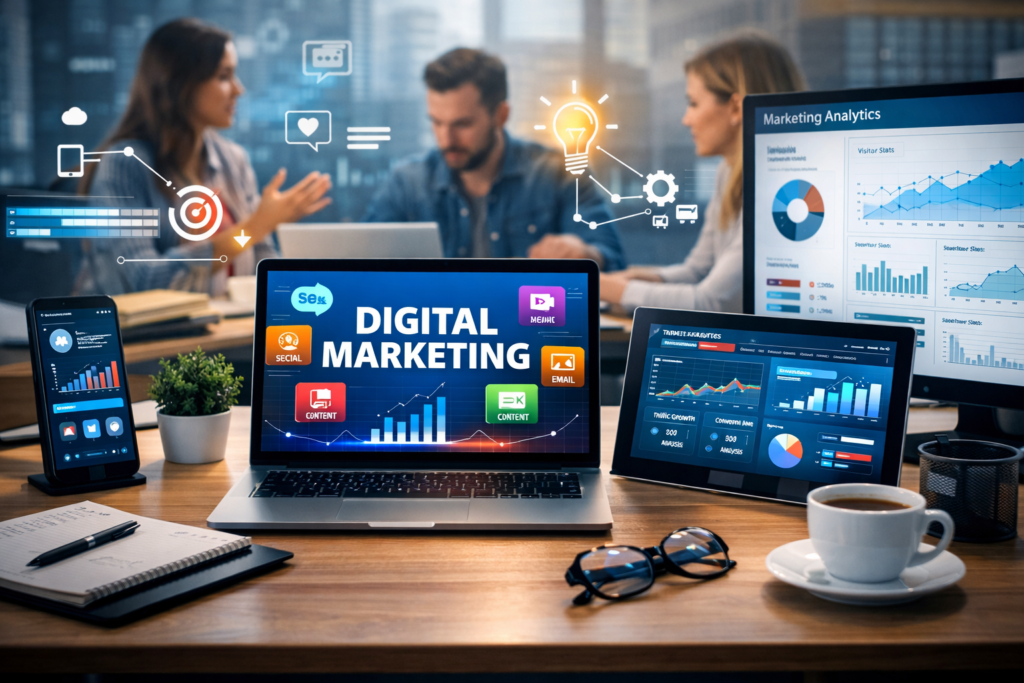
The Ultimate Guide to Digital Marketing: Strategies, Growth, and Success for Modern Businesses
Digital marketing is no longer optional for businesses. It is the foundation of how companies grow, compete, and connect with customers in the modern world. Every brand that wants visibility, sales, and long-term success must understand how digital marketing works and how to apply it effectively.
Whether you run a startup, a local service business, or an international company, marketing gives you the tools to reach your ideal customers online. It combines strategy, creativity, and technology to create measurable growth. Unlike traditional advertising, marketing allows businesses to track performance, adjust campaigns instantly, and scale faster.
This complete guide explains digital marketing in detail: what it is, why it matters, its core components, proven strategies, and how businesses can use it to dominate their market.
What Is Digital Marketing?
Digital marketing is the promotion of products or services using digital channels such as websites, search engines, social media, email, and online advertising. Instead of relying on newspapers or billboards, businesses use the internet to attract and convert customers.
At its core, marketing focuses on:
-
Reaching the right audience
-
Delivering valuable messages
-
Building trust and authority
-
Driving measurable results
Platforms like Google and YouTube have transformed how businesses communicate with customers. People search online before buying anything. If your brand is not visible online, you are invisible to potential customers.
marketing is not a single tactic. It is a complete ecosystem of strategies that work together to create consistent growth.
Why Digital Marketing Is Essential for Businesses
Modern customers live online. They research products, compare brands, read reviews, and make purchasing decisions digitally. Businesses that fail to adapt lose opportunities every day.
Global Reach
marketing allows businesses to reach customers anywhere in the world. A website is available 24/7, meaning your marketing never stops working.
Cost Efficiency
Compared to traditional advertising, digital campaigns are more affordable and scalable. Even small businesses can compete with large corporations using smart strategies.
Measurable Performance
Every click, view, and purchase can be tracked. This allows businesses to invest money where it produces real results.
Targeted Advertising
Digital marketing allows precise targeting based on interests, location, behavior, and demographics. You advertise directly to people most likely to buy.
Fast Adaptation
Campaigns can be adjusted instantly. If something is not working, you can change it today instead of waiting weeks.
These advantages make digital marketing one of the most powerful tools for business growth.
Core Components of Digital Marketing
Digital marketing consists of several interconnected systems. Each component supports the others, creating a strong foundation for online success.
Search Engine Optimization (SEO)
SEO is the process of improving a website so it ranks higher in search engine results. When customers search for a product or service, SEO ensures your business appears at the top.
Strong SEO includes:
-
Keyword research
-
Technical website optimization
-
Mobile responsiveness
-
High-quality content
-
Fast loading speed
-
Backlink building
SEO is a long-term investment. It generates organic traffic without paying for every click. Businesses with strong SEO receive consistent visitors and higher trust.
Ignoring SEO is one of the biggest mistakes companies make.
Content Marketing
Content marketing focuses on creating useful information that educates and attracts customers. Instead of pushing advertisements, you provide value.
Examples include:
-
Blog articles
-
Guides and tutorials
-
Educational videos
-
Case studies
-
Social media posts
-
Email newsletters
Good content answers questions and solves problems. When customers trust your expertise, they trust your brand. Content also strengthens SEO and improves customer loyalty.
Social Media Marketing
Social media marketing helps brands connect directly with audiences. It builds communities, increases visibility, and humanizes businesses.
Platforms such as Instagram and LinkedIn allow businesses to:
-
Share updates
-
Promote products
-
Engage customers
-
Build brand personality
-
Gather feedback
Consistency is key. Brands that post regularly stay visible and relevant.
Pay-Per-Click Advertising (PPC)
PPC advertising delivers immediate traffic. Businesses pay only when someone clicks their ad.
Benefits include:
-
Instant visibility
-
Precise audience targeting
-
Budget control
-
Fast performance data
-
Scalable campaigns
PPC is ideal for promotions, product launches, or competitive industries where organic ranking takes time.
Email Marketing
Email marketing remains one of the highest-converting digital channels. It allows direct communication with interested customers.
Effective email strategies:
-
Nurture leads
-
Promote offers
-
Build loyalty
-
Encourage repeat purchases
-
Deliver updates
Unlike social media, email lists are owned assets. You control communication without depending on algorithms.
Analytics and Data Tracking
Data drives digital marketing success. Analytics tools measure performance and reveal opportunities.
Key metrics include:
-
Website traffic
-
Conversion rates
-
Customer behavior
-
Campaign ROI
-
Audience demographics
Smart businesses use data to improve constantly. Marketing becomes a science instead of guessing.
Building a Strong Digital Marketing Strategy
A successful digital marketing strategy is structured and intentional.
Step 1: Define Clear Goals
Set measurable objectives:
-
Increase website traffic
-
Generate leads
-
Boost sales
-
Improve brand awareness
-
Retain customers
Clear goals guide every action.
Step 2: Understand Your Audience
Research your customers:
-
What problems do they have?
-
What motivates their purchases?
-
Where do they spend time online?
Marketing works when it speaks directly to real needs.
Step 3: Choose the Right Channels
Not every business needs every platform. Focus on channels where your audience is active.
Quality always beats quantity.
Step 4: Create Consistent Content
Regular publishing builds recognition and trust. Brands that disappear lose attention.
Consistency creates authority.
Step 5: Measure and Optimize
Review performance weekly. Adjust strategies based on data. Growth comes from continuous improvement.
Digital Marketing Trends Shaping the Future
The digital landscape evolves quickly. Businesses must adapt to remain competitive.
Artificial Intelligence
AI automates tasks, improves personalization, and enhances customer experiences.
Video Dominance
Short videos and live streaming generate higher engagement than static content.
Personalization
Customers expect tailored experiences. Generic marketing is losing effectiveness.
Privacy and Ethical Data Use
Transparency builds trust. Brands must collect and use data responsibly.
Voice and Visual Search
Search behavior is changing. Optimization must evolve accordingly.
Businesses that adapt early gain strong competitive advantages.
Common Digital Marketing Mistakes
Many companies struggle because they repeat avoidable errors:
-
Ignoring SEO fundamentals
-
Posting without strategy
-
Buying fake engagement
-
Focusing only on sales
-
Neglecting analytics
-
Inconsistent branding
-
Expecting instant success
Digital marketing is a long-term system. Patience and smart execution produce lasting results.
How Digital Marketing Drives Business Growth
Digital marketing is more than advertising. It is a complete growth engine.
It helps businesses:
-
Attract new customers
-
Build brand authority
-
Increase customer loyalty
-
Improve sales funnels
-
Expand globally
-
Compete with larger companies
-
Lower acquisition costs
-
Create predictable revenue
Every modern success story involves a strong digital presence.
The Competitive Advantage of Digital Brands
Brands that master digital marketing dominate their industries. Those that ignore it fall behind.
Customers search online before making decisions. Visibility equals opportunity. A strong digital presence builds trust before a customer ever contacts your business.
Marketing is infrastructure, not a trend.
Companies investing in digital systems today are building the foundation for tomorrow’s leadership.
Long-Term Benefits of Digital Marketing
The real power of marketing is sustainability.
-
SEO continues generating traffic for years
-
Content builds authority over time
-
Email lists create repeat customers
-
Social communities grow loyalty
-
Data improves decision-making
-
Automation increases efficiency
These benefits compound. The longer you invest, the stronger your advantage becomes.
Digital Marketing for Small Businesses
Small businesses often believe marketing is expensive. In reality, it is their greatest opportunity.
With smart strategy, small companies can:
-
Target niche audiences
-
Compete with large brands
-
Build strong local visibility
-
Create loyal communities
-
Grow without massive budgets
Digital marketing levels the playing field.
Creativity and consistency beat size.
The Role of Branding in Digital Marketing
Digital marketing is not only about traffic. It is about perception.
Strong branding includes:
-
Clear messaging
-
Consistent visual identity
-
Professional design
-
Authentic communication
-
Recognizable voice
Customers buy from brands they trust. Trust is built through consistent digital presence.
Conclusion
Digital marketing is the most powerful business tool of the modern era. It combines technology, creativity, and analytics to create measurable growth.
From SEO and content marketing to social media and paid advertising, every component plays a role in building visibility and authority.
Success comes from strategy, not randomness. Businesses that invest in marketing build systems that generate traffic, trust, and revenue for years.
The future belongs to digital brands. The sooner businesses embrace marketing, the faster they grow.
Visit About Us page to contact or Through WhatsApp.
Your journey starts here — and we’re ready to help you every step of the way.
FAQs
What is digital marketing in simple terms?
Digital marketing is promoting products or services using online platforms like websites, search engines, social media, and email.
Is digital marketing expensive?
No. It can fit any budget and scale as businesses grow.
How long does digital marketing take to work?
Paid ads show fast results. SEO and content marketing build results over months.
Can small businesses compete using digital marketing?
Yes. Smart strategy allows small companies to compete with large brands.
Why is digital marketing important today?
Because customers search and buy online. Without digital presence, businesses lose visibility.
