
performance marketing services
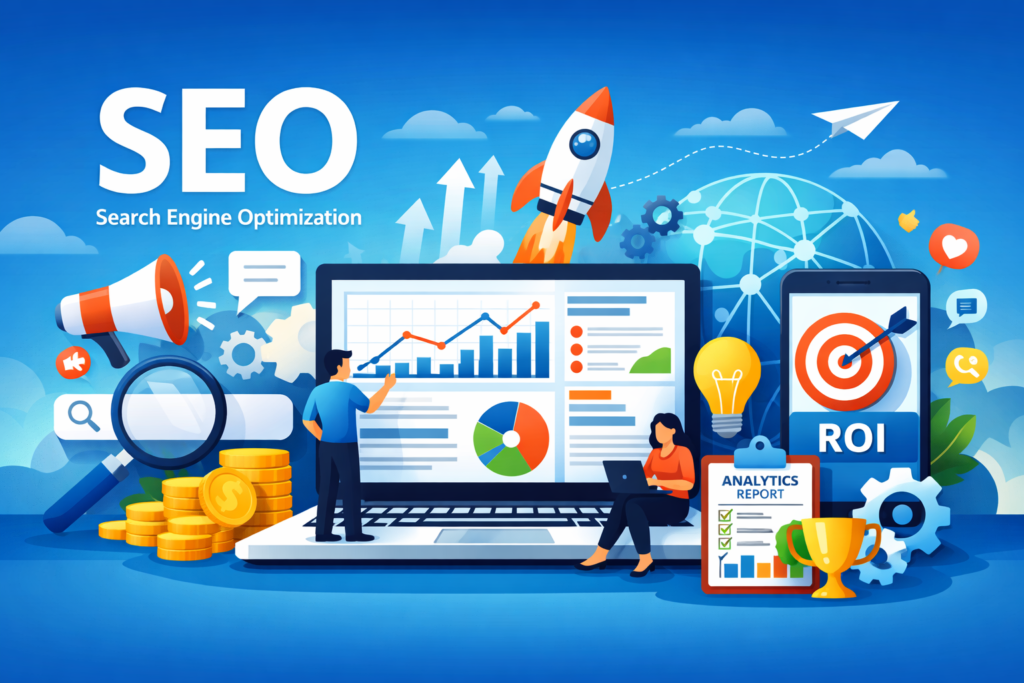
Introduction to Google Ranking, SEO, and Performance Marketing Services
In today’s digital world, having a website is not enough. Almost every business relies on online visibility to reach potential customers. When someone searches for products or services, Google is the first place they look. Appearing on the first page of Google increases your chances of attracting visitors, generating leads, and boosting sales. Websites hidden on page two or three are often overlooked. performance marketing services
Google ranking reflects your website’s position in search results. Higher rankings mean more traffic, credibility, and growth. Achieving top rankings requires SEO services, strategic performance marketing services, high-quality content, backlinks, and analytics tools to track results effectively.
How Google Determines Website Rankings for SEO and Performance Marketing
Google uses advanced algorithms to decide which websites appear at the top. These algorithms consider multiple ranking factors to provide the most relevant and useful results.
Key ranking factors include:
-
Content relevance: Your content must match user search intent.
-
Quality and originality: Unique, informative, and well-structured content ranks better.
-
Website speed: Fast-loading pages improve user experience and rankings.
-
Mobile-friendliness: Mobile-optimized websites are prioritized.
-
Secure HTTPS connection: Trustworthy sites with HTTPS perform better.
-
High-quality backlinks: Links from authoritative websites increase credibility.
-
User experience and engagement: Metrics like bounce rate, time on site, and page interactions influence rankings.
Staying updated with algorithm changes and using analytics tools ensures long-term performance and improved rankings for SEO and performance marketing services.
Importance of Keyword Research for Google Ranking
Keyword research is the foundation of effective SEO services and performance marketing strategies. Keywords are the phrases users type into Google to find information, products, or services.
Types of keywords:
-
Short-tail keywords: General terms like “SEO services.”
-
Long-tail keywords: Specific searches like “affordable SEO services for small businesses.”
-
Local keywords: Include geographic focus, e.g., “SEO agency in Lahore.”
-
Transactional keywords: Indicate buying intent, e.g., “buy SEO package online.”
Using a balanced mix of keywords attracts the right audience and improves conversions while supporting your Google ranking strategy.
Creating High-Quality Content for SEO and Performance Marketing
Content is one of the strongest ranking factors. Google favors websites that provide clear, helpful, and easy-to-understand content.
High-quality content should:
-
Answer frequently asked questions
-
Explain topics clearly with step-by-step instructions
-
Include headings and subheadings (H2/H3/H4) with keywords
-
Naturally incorporate SEO, analytics, and performance marketing terms
-
Include visuals like images, infographics, and videos
-
Be updated regularly to reflect industry trends
Avoid keyword stuffing; Google rewards value-driven content over repetitive phrases.
On-Page SEO Optimization for Google Ranking
On-page SEO focuses on improving elements within your website to boost visibility in search results.
Key on-page optimization strategies:
-
Title tags and meta descriptions: Include primary keywords.
-
Headings (H1, H2, H3, H4): Organize content and highlight key terms.
-
Internal linking: Connect relevant pages to improve crawlability.
-
Image optimization: Use descriptive filenames and alt tags.
-
URL structure: Clean URLs with keywords are easier for Google to index.
Optimizing your website this way enhances user experience and helps Google understand your content.
Technical SEO and Website Performance
Technical SEO ensures your website’s backend is optimized for search engines. Even with great content, technical issues can harm rankings.
Important technical SEO factors:
-
Fast page loading
-
Mobile-responsive design
-
Secure HTTPS certificate
-
XML sitemap submission
-
Fix broken links and remove duplicate content
-
Structured data for rich snippets
Google’s Core Web Vitals measure speed, interactivity, and visual stability—critical for ranking and user satisfaction.
Mobile Optimization for Better SEO Results
With most users browsing on mobile, mobile-first indexing means Google evaluates the mobile version of your website.
Tips for mobile optimization:
-
Use responsive design
-
Make text readable without zooming
-
Ensure buttons and navigation are touch-friendly
-
Optimize images for fast loading
-
Avoid intrusive pop-ups
Mobile-friendly websites improve user engagement and ranking.
Building High-Quality Backlinks for SEO Authority
Backlinks act as votes of confidence for your website. They signal reliability and authority to Google.
Ways to earn backlinks:
-
Guest posts on reputable industry sites
-
Create shareable, high-value content
-
Partner with relevant websites
-
Submit to respected business directories
-
Publish case studies and research
Focus on quality over quantity; links from authoritative sites outweigh numerous low-quality links.
Enhancing User Experience and Engagement
Google values websites that offer positive user experiences. Metrics like time on site, pages per session, and bounce rate influence rankings.
Improve user experience by:
-
Designing a clean, intuitive layout
-
Using readable fonts and visuals
-
Minimizing disruptive ads
-
Adding clear calls-to-action (CTAs)
-
Ensuring fast-loading pages
Higher engagement signals Google that your website is valuable.
Leveraging Analytics Tools for SEO and Performance Marketing
Analytics tools track website performance, helping refine SEO and marketing strategies. Tools like Google Analytics and Google Search Console provide insights on:
-
Organic traffic sources
-
Keyword performance
-
User behavior and engagement
-
Conversion rates and bounce rates
Data-driven strategies ensure continuous improvement and better Google rankings.
Local SEO for Targeted Traffic
For businesses serving specific regions, local SEO is vital. It ensures your website appears in location-based searches and Google Maps.
Local SEO strategies include:
-
Optimize your Google Business Profile
-
Use location-specific keywords
-
Collect positive customer reviews
-
Add your business to local directories
-
Display contact information clearly
Local SEO builds trust and drives nearby customers to your business.
Content Marketing to Boost Google Rankings
Content marketing enhances SEO by building authority and trust.
Effective strategies include:
-
Educational blog posts
-
How-to guides and tutorials
-
Industry updates and case studies
-
FAQs and resource pages
-
Regular content updates
High-value content signals authority to Google, improving organic traffic.
Video Content and SEO
Including video on your website boosts user engagement and increases dwell time, which can positively impact Google ranking. To optimize videos for SEO:
-
Use descriptive titles and tags containing relevant keywords.
-
Add transcripts to make content indexable by search engines.
-
Optimize video thumbnails to attract clicks.
-
Embed videos on relevant pages alongside supporting content.
Engaging video content not only retains visitors longer but can also generate backlinks, further improving your site’s authority and search visibility.
Internal Linking and Crawlability
Internal links help Google navigate your website and distribute authority across pages.
Best practices:
-
Link naturally to related content
-
Use keyword-rich anchor text
-
Ensure main pages are linked from the homepage
-
Avoid excessive linking per page
Internal linking improves SEO and user navigation.
Structured Data and Rich Snippets
Structured data helps search engines understand your content and enables rich snippets in search results.
Benefits include:
-
Enhanced visibility in SERPs
-
Higher click-through rates (CTR)
-
Better presentation of content
-
Improved indexing of pages
Implement schema for SEO services, analytics tools, and performance marketing content for higher ranking potential.
Conversion Rate Optimization (CRO) and SEO
SEO drives traffic, but conversions grow your business. CRO ensures visitors take desired actions.
Tips for CRO:
-
Clear and compelling CTAs
-
Simple, optimized forms
-
Highlight benefits and trust signals
-
Test layouts and copy with A/B testing
Combining SEO and CRO maximizes ROI.
Social Proof and Competitor Analysis
Reviews, testimonials, and case studies enhance credibility and indirectly improve rankings. Competitor analysis identifies gaps and opportunities.
Steps include:
-
Showcase client reviews and success stories
-
Track competitor keywords and backlinks
-
Analyze content performance
-
Adjust strategies based on insights
Social proof and competitor analysis ensure your site remains authoritative and competitive.
FAQs
About Google Ranking, SEO, and Performance Marketing
What is Google ranking?
Google ranking is the position of your website in search engine results. Higher positions increase visibility and traffic.
How long does it take to rank on Google?
It usually takes 3–6 months, depending on competition, keyword difficulty, and website quality.
Why is keyword research important?
Keyword research identifies what your audience searches for, improving content relevance and ranking potential.
What is on-page SEO?
On-page SEO optimizes headings, meta tags, internal links, and content structure to improve search visibility.
What is off-page SEO?
Off-page SEO builds website authority via backlinks, social signals, and mentions from other websites.
Do backlinks still matter?
Yes, high-quality backlinks remain a key factor in Google ranking.
How does mobile optimization affect ranking?
Mobile-friendly websites rank higher due to Google’s mobile-first indexing.
Can small businesses rank on Google?
Yes, with local SEO, targeted keywords, quality content, and technical optimization.
Why are analytics tools important?
Analytics track traffic, engagement, and conversions, enabling continuous optimization of SEO and marketing efforts.
Conclusion: Achieve Higher Google Rankings with SEO and Performance Marketing Services
Achieving top Google ranking requires a combination of:
-
SEO services
-
Technical website optimization
-
Quality, engaging content
-
High-quality backlinks
-
Analytics monitoring and performance tracking
Focus on delivering value to users, optimize mobile and technical performance, and continually update content. With consistent effort, your website can attract more traffic, improve conversions, and grow your business.
Start your journey today with expert SEO and performance marketing services.
